Swallows need your help at home and away
|
The conservation status of the swallow is now Green, according to the Birds of Conservation Concern population status of birds in the UK, Channel Islands and the isle of Man. BUT – the species populations have declined in Europe whilst the UK populations vary from one year to another, depending on the weather. | ||
Swallows tend to spend the winters in southern Africa. Then they fly towards the UK, migrating by day and picking up food along the way, as they fly back to the UK for our summers which means you'll tend to see them between March & October. Many don't make the journey across the Sahara, dying of starvation, exhaustion & because of storms. They generally fly at about 17-22 miles an hour, although their top speed is a really impressive 35 mph! Swallows are small birds with blue glossy backs, a sort of creamy-white underneath & red throats. | 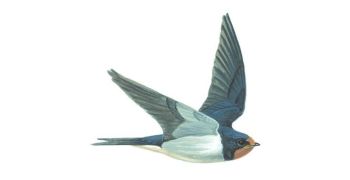 Swallows are protected by the 1981 Wildlife & Countryside Act Image © RSPB | |
| Swallows are in decline in Europe The RSPB suggests that a number of factors may be involved in the decline of swallow numbers, something which has been going on since around 1970. Swallows are returning to their breeding areas in poor condition, which means they are laying fewer eggs than before. The ever increasing expanse of the Sahara may make it more difficult terrain to cross; changes in farming practices in Europe could mean fewer nesting places & reduced insect populations to feed from. Swallows are not taking kindly to the colder & later frosts in May, or the very hot summers, which mean that pools dry out and there are fewer insects around - many nestlings die from heat exhaustion and dehydration. How you can help swallows The RSPB is encouraging people to put nesting boxes in your homes and particularly asking house builders of new homes to put up swallow nests for the birds. Swallows can enter buildings through tiny holes - if you plan to make a hole, it should be at least 50 mm high & 70mm wide under the eaves. Nesting places should also be out of hte reach of cats. The RSPB has more tips on helping swallows to nest here - You can join the RSPB & help it continue its work to conserve & protect birds like the swallow. Membership includes free entry to 100 nature reserves, a free joining gift, & a free magazine four times a year, packed with articles & stunning photographs. This is incredible value - it's £3 a month for an adult. Gift memberships for nature lovers & memberships for children also available - click here for details |